
No products in the cart.
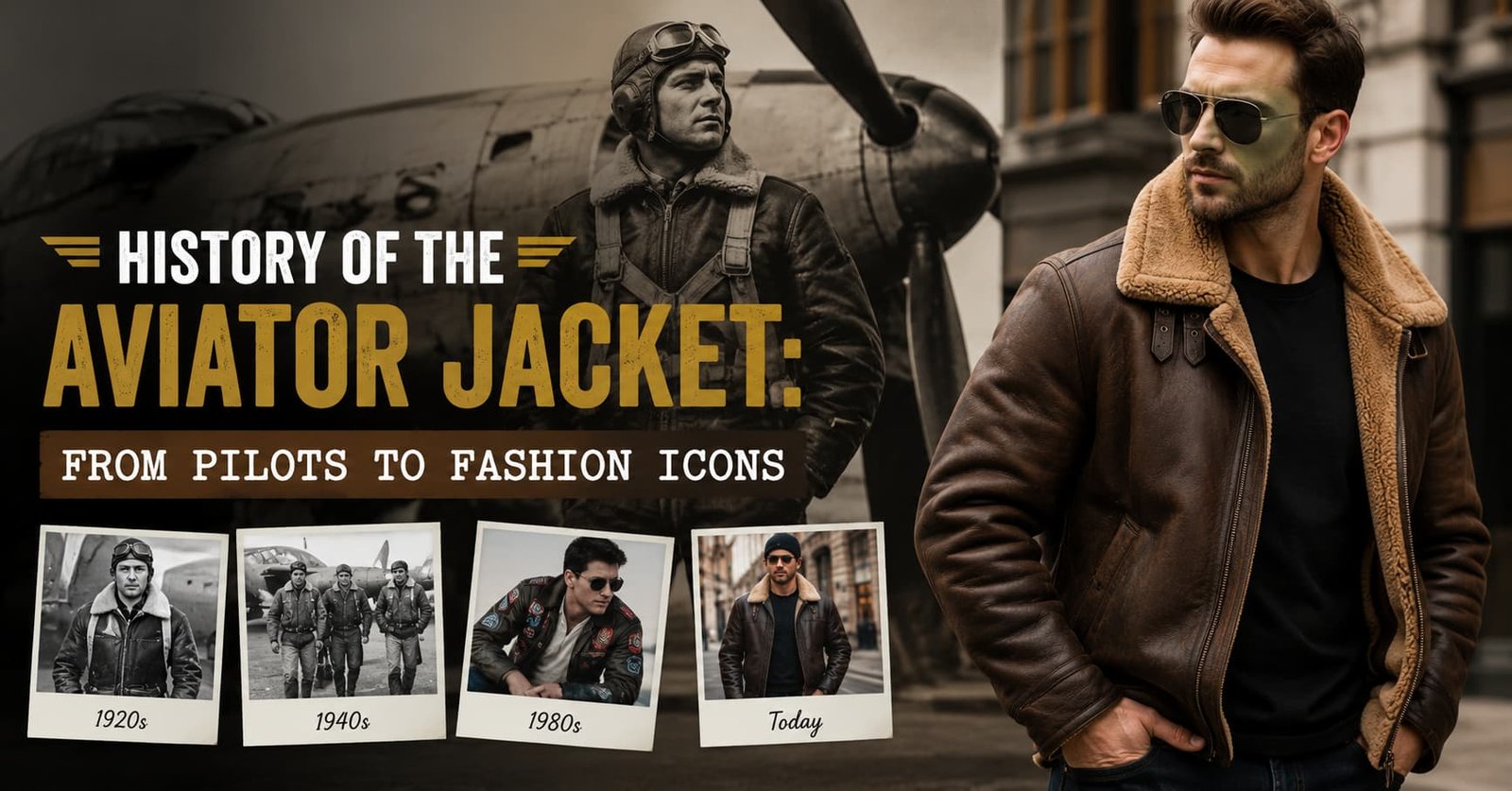
History of the Aviator Jacket: From Pilots to Fashion Icons
The aviator jacket is more than just a piece of outerwear. It is a story stitched in leather, born in freezing cockpits, refined in wartime skies, and eventually adopted by fashion houses across the world. When you look at it today, it feels like a timeless style statement, but its roots are deeply practical and built for survival.
Understanding the aviator jacket history takes us back to the early days of aviation when pilots flew open cockpits at extreme altitudes. They needed warmth, durability, and protection from harsh winds. What began as military necessity eventually became one of the most iconic fashion staples in modern menswear and womenswear.
This journey from cockpit to catwalk is exactly what makes the history of aviator leather jacket so fascinating. It is not just about style evolution, but about innovation shaped by human endurance and creativity.
The Early Days of Flight and the Birth of the Aviator Jacket
The pilot leather jacket origin can be traced back to World War I. Early aircraft did not have enclosed cabins, which meant pilots were exposed to freezing temperatures at high altitudes. Temperatures could drop far below zero, making survival itself a challenge.
To solve this, military designers created heavy-duty leather flight jackets lined with fur or shearling. These jackets were not designed for style at all. Their purpose was simple: keep pilots alive and functional in extreme conditions.
Leather became the material of choice because it was wind-resistant, durable, and flexible enough for movement. Shearling lining provided insulation that trapped body heat. The combination proved highly effective, laying the foundation for what we now recognize as the aviator jacket history.
Early versions were bulky and heavy, but they marked the beginning of a revolution in aviation apparel.
World War II and the Rise of Iconic Flight Jackets
The real transformation of the aviator jacket happened during World War II. Aircraft had evolved, flying higher and faster, and the need for better insulation increased. This led to the development of legendary designs such as the B3 bomber jacket and A2 flight jacket.
These jackets refined the original concept. They were slightly lighter, more structured, and designed with improved mobility in mind. The shearling-lined collars became a defining feature, offering both warmth and a rugged visual identity.
The pilot leather jacket origin during this era also introduced a sense of identity and pride. Pilots wore their jackets like badges of honor. Many even personalized them with squadron patches, artwork, and insignias.
This emotional connection added another layer to the history of aviator leather jacket. It was no longer just protective gear. It became a symbol of courage, adventure, and elite skill in the skies.
From Military Gear to Hollywood Symbol
After the wars ended, surplus military jackets entered civilian life. Veterans continued wearing them, and soon, Hollywood picked up the style.
Movies played a huge role in popularizing aviator jackets. Films featuring fighter pilots and rebellious characters turned the jacket into a symbol of masculinity and independence. Actors wearing leather flight jackets on screen made them instantly desirable to the public.
By the 1950s and 1960s, the aviator jacket history had already shifted from military utility to cultural identity. It was no longer confined to pilots. It had become part of mainstream fashion.
This transition shows how practical design can evolve into cultural symbolism when it resonates with people on an emotional level.
The Evolution Into Fashion Industry Staple
As fashion evolved, designers began reinterpreting the classic aviator jacket. Luxury brands and streetwear labels started experimenting with cuts, materials, and finishes while maintaining the core silhouette.
Leather was still the primary material, but variations emerged, including distressed finishes, suede textures, and lightweight alternatives for everyday wear. The shearling collar remained a signature detail, preserving its connection to aviation heritage.
This phase solidified the history of aviator leather jacket as a bridge between functionality and style. It was now seen on runways, in fashion magazines, and in everyday urban wardrobes.
Brands began to understand that the jacket’s appeal was not just visual. It carried a story of bravery and exploration that people connected with deeply.
A modern example of this evolution can be seen in collections from brands like Riders Armor, which blend traditional aviation aesthetics with contemporary fashion design. These jackets maintain the rugged identity of the original while adapting to modern lifestyle needs.
Why the Aviator Jacket Never Goes Out of Style
One of the most interesting aspects of the aviator jacket history is its consistency. Unlike many fashion trends that fade, this jacket has remained relevant for over a century.
The reason is simple. It combines practicality with timeless design. The structure is flattering, the material is durable, and the silhouette works across generations.
Another reason is emotional storytelling. When people wear an aviator jacket, they are not just wearing leather. They are wearing a symbol of aviation history, adventure, and resilience.
This emotional depth is what keeps the pilot leather jacket origin alive in modern fashion conversations.
Modern Interpretations and Everyday Styling
Today, the aviator jacket is no longer limited to pilots or luxury fashion enthusiasts. It is a versatile wardrobe essential that fits casual, smart casual, and even semi-formal looks.
Modern versions are lighter, more breathable, and designed for everyday comfort. Designers focus on improving fit while preserving iconic elements like the shearling collar and leather texture.
Men often pair aviator jackets with jeans and boots for a rugged look, while women style them with dresses, denim, or even skirts for a bold contrast.
The beauty of the history of aviator leather jacket is that it adapts without losing its identity. Whether worn in winter streets or fashion events, it always stands out.
Brands like Riders Armor continue to explore this balance, offering designs that respect tradition while embracing modern aesthetics.
The Cultural Impact of the Aviator Jacket
Beyond fashion, the aviator jacket has left a strong cultural footprint. It represents rebellion, freedom, and exploration. From fighter pilots in war films to rock stars and fashion icons, it has been worn by individuals who challenge norms.
Its influence extends into music, cinema, and street culture. The jacket has become a visual shorthand for confidence and individuality.
This cultural depth is a major reason why the aviator jacket history remains relevant in discussions about fashion evolution.
How the Aviator Jacket Became a Global Fashion Icon
Global fashion adoption of the aviator jacket was not accidental. It was driven by storytelling, media influence, and timeless design.
As international fashion markets expanded, the jacket found its place in winter collections across Europe, North America, and Asia. Designers adapted it for different climates and cultural aesthetics, but the core design remained unchanged.
This universality is what makes the pilot leather jacket origin so powerful. It transcends geography and continues to appeal to people from all walks of life.
Conclusion
The journey of the aviator jacket is a rare example of functionality turning into fashion legacy. What started as survival gear for early pilots became one of the most enduring style icons in history.
From the harsh conditions of World War I cockpits to modern fashion runways, the aviator jacket history reflects innovation, resilience, and timeless design. Its transformation into everyday fashion proves that true style is born from purpose.
Whether you are drawn to its rugged aesthetic or its historical significance, the aviator jacket remains a wardrobe essential that tells a powerful story every time it is worn.
If you are looking to experience this blend of heritage and modern design, exploring quality pieces from brands like Riders Armor can be a great starting point.
Frequently Asked Questions
What is the origin of the aviator jacket?
The pilot leather jacket origin dates back to World War I when open-cockpit pilots needed protection from extreme cold. Leather jackets lined with shearling were created for insulation and durability.
Why were aviator jackets originally made of leather?
Leather was chosen because it is wind-resistant, strong, and flexible. It provided essential protection against harsh weather conditions faced by early pilots.
How did the aviator jacket become popular in fashion?
After World War II, surplus military jackets entered civilian use and were popularized by Hollywood films, turning them into a cultural fashion symbol.
What makes the aviator jacket different from a bomber jacket?
While both are aviation-inspired, aviator jackets often feature shearling collars and heavier insulation, whereas bomber jackets are typically lighter and more streamlined.
Are aviator jackets still in style today?
Yes, they remain a timeless fashion staple. Modern designs have evolved for comfort and versatility while preserving their classic aviation-inspired look.
How should I style an aviator jacket?
Pair it with jeans, boots, or casual outfits for a rugged look. It also works well with modern streetwear or layered winter styles.
What does the aviator jacket symbolize?
It symbolizes courage, adventure, and freedom. Its military roots and cinematic presence give it a strong cultural and emotional identity.