
No products in the cart.
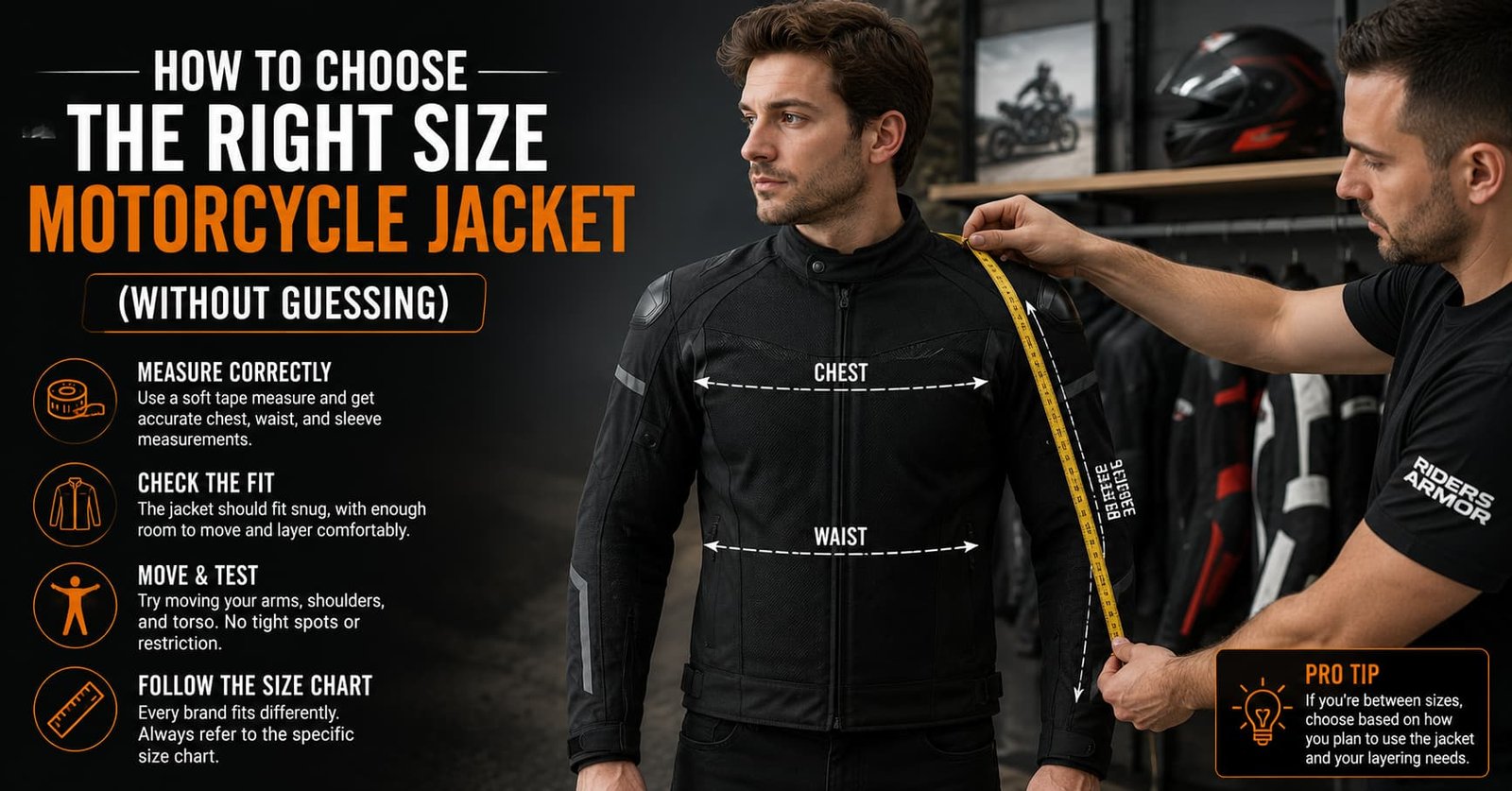
How to Choose the Right Size Motorcycle Jacket (Without Guessing)
I once watched a rider drop his bike at a stop sign, barely five miles an hour, nothing dramatic. But his jacket rode up his back the second he hit the pavement, and his elbow armor slid halfway to his forearm. He walked away with road rash he didn’t need to have. The jacket wasn’t cheap. It just wasn’t his size.
That moment stuck with me, because it’s such a common story. Riders spend hours comparing brands, materials, and styles, then pick a size the same way they’d pick a t-shirt: by guessing. A motorcycle jacket isn’t a t-shirt. It’s safety equipment that happens to look good, and fit is the difference between it doing its job and just hanging there.
This guide walks you through exactly how to size a leather motorcycle jacket, what a proper fit actually feels like, and the mistakes that trip up even experienced riders. By the end, you’ll know precisely what to look for, whether you’re buying online or trying jackets on in a shop.
Looking for the full picture on riding gear? Browse the complete Riders Armor shop while you’re at it.
Why Jacket Fit Matters More Than You’d Think
A motorcycle jacket has one job beyond looking sharp: staying exactly where it’s supposed to be if you go down. That means the armor over your shoulders, elbows, and back needs to sit on your actual shoulders, elbows, and back, not two inches off in any direction.
Too loose, and the jacket shifts on impact, taking the armor with it. Too tight, and you lose range of motion right when you need to brace, steer, or tuck. Neither extreme protects you the way a properly fitted jacket does.
There’s a comfort argument too. A jacket that fits well disappears after the first few minutes of a ride. One that doesn’t will remind you constantly, whether it’s cutting into your armpits at 70 mph or flapping around your torso like a sail.
Start With Your Body, Not the Size Label
Here’s the first mistake almost everyone makes: shopping by the size they wear in regular clothing. Motorcycle jackets run differently than shirts and casual jackets, and every brand has its own quirks. A large in one label can fit like a medium in another.
The fix is simple. Measure yourself, then compare those numbers against the brand’s own size chart every single time, even if you’ve bought from them before. If you’re browsing the Riders Armor shop, each product page links back to that same detailed size guide for exactly this reason.
Chest
Wrap a soft measuring tape around the fullest part of your chest, typically just under your armpits. Keep the tape level and snug against your body without pulling it tight. Breathe normally while you measure. This number is usually the anchor point for sizing.
Waist
Measure around your natural waistline, roughly at belly button height. Riding jackets often include waist adjusters or belts, so a little wiggle room here isn’t a dealbreaker, but you still want an accurate starting number.
Shoulders
Measure from the edge of one shoulder to the other, across your back. This one matters more than people realize, because shoulder seams that sit even slightly off your actual shoulder line will bunch or restrict movement the moment you grip the handlebars.
Sleeve Length
Start at the shoulder seam and run the tape down to just past your wrist bone, not to your palm. Motorcycle jackets are cut with a slight forward curve to match a riding position, so sleeves should sit a touch longer than what you’re used to in a regular jacket. If your arms are longer than average, or you’re over 6 feet tall, pay extra attention here since standard sizing can run short.
How to Size a Leather Motorcycle Jacket Specifically
Leather behaves differently than textile gear, and that changes how you should approach sizing it.
New leather is stiff. It hasn’t broken in yet, which means a jacket that feels snug in the shop will loosen slightly over the following weeks as the material softens and molds to your body. This is normal and expected with quality leather.
Because of that, aim for a fit that’s snug through the shoulders and chest, with just enough room to take a full breath without the jacket pulling across your back. If you can comfortably slide a flat hand between your chest and the zipped jacket, you’re usually in the right range. If you can’t get your hand in at all, size up. If there’s a fist’s worth of space, size down.
Leather also doesn’t stretch as generously as textile or mesh jackets, so don’t buy a leather jacket expecting it to loosen dramatically. A little break-in, yes. A full size of give, no.
A good habit before buying: sit on your bike, or mimic the position at home, arms forward and slightly bent. This is the posture you’ll actually be riding in, and it reveals problems a mirror never will. Sleeves that looked perfect standing straight can suddenly ride up past your wrist once your arms move forward. Shoulders that felt fine can pull tight across your back the moment you lean into a riding stance.
Signs Your Jacket Fits Right
- The shoulder seams line up with the edge of your actual shoulders, not further out or in.
- Elbow armor sits directly over your elbow when your arms are bent, not above or below it.
- The jacket allows a full, unrestricted breath when zipped.
- Sleeves reach your wrist in riding position without pulling up.
- The body length covers your lower back and hips without bunching when seated.
- You can rotate your shoulders and reach forward without the jacket pulling tight across your back.
Signs You’ve Got the Wrong Size
- The jacket rides up your torso when you raise your arms.
- Armor shifts noticeably when you move, rather than staying put.
- You feel pinched or compressed across the chest or shoulders when zipped.
- Sleeves bunch at the wrist or expose skin at the cuff when you extend your arms.
- There’s visible sagging or extra fabric anywhere across the torso.
Don’t Forget Jacket Type and Riding Style
Fit isn’t one-size-fits-all across categories, and this is where a lot of generic advice falls short.
A sport riding jacket, like the racing-cut styles Riders Armor makes for Ducati fans, is cut aggressively, tighter through the torso and pre-curved for a forward-leaning stance. A relaxed fit here defeats the purpose, since loose fabric flapping at highway speed is both uncomfortable and, over time, wearing on the seams.
A touring or cruiser jacket, on the other hand, is usually cut a little more generously to allow for a more upright seating position and layering underneath. If you ride long distances in changing weather, you’ll want enough room for a thermal liner or an extra layer without the jacket feeling like a straitjacket.
This is also where quality gear brands earn their reputation. Riders Armor, for example, builds its jackets around real riding positions rather than standing mannequins, which is exactly the kind of detail that separates a jacket that merely fits from one that actually performs once you’re moving.
Common Sizing Mistakes to Avoid
Buying based on your regular clothing size. Motorcycle jackets are cut for a riding posture, not a standing one. Always measure and check the brand’s chart.
Ignoring the brand’s specific size chart. Sizing varies enough between manufacturers that assuming consistency will burn you eventually.
Sizing up “just in case.” A jacket that’s too big won’t protect you better. It’ll shift on impact and let armor drift away from the joints it’s meant to cover.
Skipping the riding position test. Standing in front of a mirror tells you very little about how a jacket performs once your arms are forward and your back is angled into the seat.
Forgetting about layering. If you ride through cold mornings or unpredictable weather, account for a base layer or liner when checking chest and shoulder room.
A Quick Word on Gear That Works Together
Jacket fit doesn’t exist in isolation. The best-fitted jacket in the world still leaves you exposed if the rest of your gear isn’t dialed in. It’s worth mentioning here, since riders often research jackets and helmets separately, that pairing a well-fitted jacket with one of the top motorcycle helmets 2026 has to offer rounds out your protection in a way that actually matters on the road. Helmet technology has moved fast in the last couple of years, with better ventilation, lighter shells, and smarter visor systems becoming standard rather than premium extras, so it’s worth researching current models rather than assuming last decade’s helmet still holds up. For more riding gear guidance like this, the Riders Armor blog is a good place to dig deeper.
Final Thoughts
Getting the right size motorcycle jacket isn’t complicated, but it does require a little patience and a tape measure instead of a guess. Measure your chest, waist, shoulders, and sleeve length. Compare those numbers against the specific brand’s chart rather than your usual clothing size. Test the fit in a riding position, not just standing still. And remember that leather needs a snug starting point since it breaks in over time, while textile and mesh jackets offer a bit more forgiveness.
A jacket that fits right doesn’t just look better in photos. It stays where it should when you need it most, keeps you comfortable for hours in the saddle, and lets you forget you’re wearing it at all, which is exactly the point.
If you’re shopping for your next jacket, take the measurements above, check the size chart carefully, and don’t be afraid to try before you commit. Shop Riders Armor jackets and find the fit that’s right for you. Your future self, and your skin, will thank you.
Frequently Asked Questions
What size motorcycle jacket should I buy if I’m between two sizes?
Generally, size down for leather since it stretches and breaks in over time, and size up for textile or mesh if you plan to layer underneath. Always check the specific brand’s size chart first, since the right call can depend on how that jacket is cut.
How do I know if my motorcycle jacket is too big?
If the jacket rides up when you raise your arms, the armor shifts out of place when you move, or there’s visible extra fabric bunching at the waist or back, it’s too big. A properly sized jacket stays put even during movement.
Should a leather motorcycle jacket feel tight at first?
Yes, a little. New leather is stiff and will soften and mold to your body over the first few weeks of wear. Aim for a snug fit that still allows a full breath, not one so tight it restricts movement from day one.
Do motorcycle jacket sizes run the same as regular jacket sizes?
No. Motorcycle jackets are cut for a forward-leaning riding position, so sleeves tend to run longer and the torso fits closer to the body than standard clothing. Never assume your normal jacket size will translate directly.
How should the sleeves fit on a motorcycle jacket?
Sleeves should reach just past your wrist bone when standing, and stay at your wrist without pulling up when your arms are forward in riding position. Shirt-sleeve length measurements typically fall short for this purpose.
Can I return a motorcycle jacket if the size is wrong?
Most reputable retailers and brands, including Riders Armor, offer exchanges or returns on unworn gear, so check the specific policy before buying. It’s always worth trying the jacket in a riding position at home before removing tags, just to be sure.
What’s the best way to check jacket fit without a bike nearby?
Sit in a chair and lean forward slightly with your arms extended as if gripping handlebars. This mimics riding posture closely enough to reveal issues with sleeve length, shoulder movement, and torso room that standing straight won’t show.